Hotel robots will earn their place through small tasks that repeat every day. The areas worth watching are service delivery, cleaning, guest support, and the software that connects each machine to hotel work.
- Delivery robots that handle room-service runs
- Cleaning robots that work around guests
- Software that links robots with hotel staff and building systems
Delivery beyond the lobby
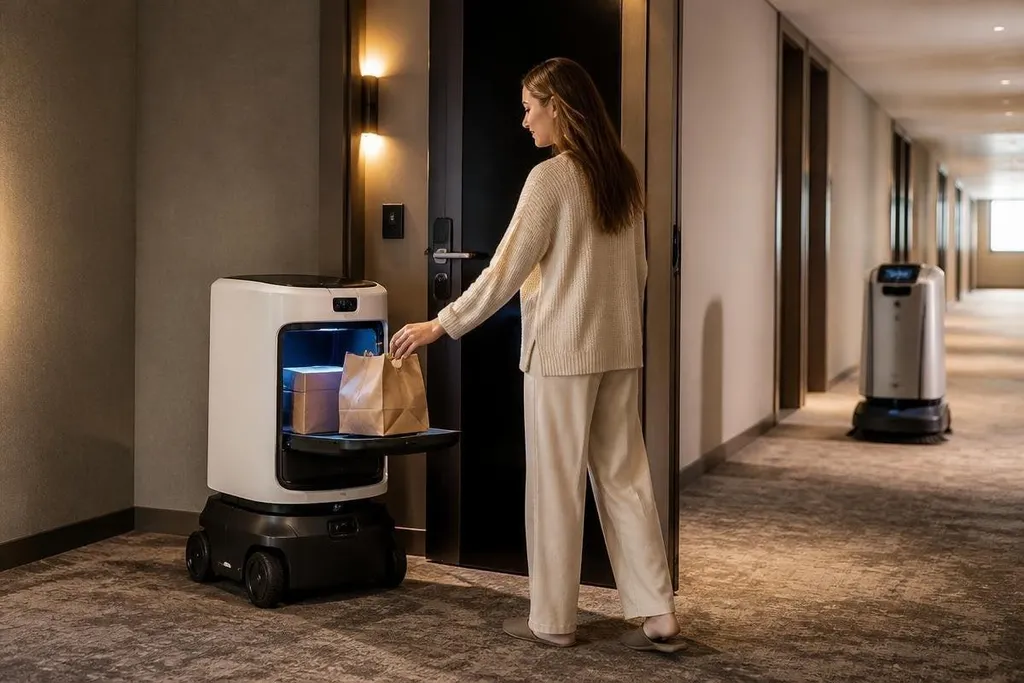
A delivery robot in a hotel needs more than wheels and a storage box. It must reach the right floor, stop at the right room, avoid people, and tell staff when the handoff is complete.
That requires several systems to work together. The robot needs maps for indoor travel, sensors to detect people and walls, and a way to call or use an elevator.
The building may also need doors, lifts, and room-access systems that can accept a robot’s request. The useful change will be fewer manual trips for staff.
A worker could send towels, food, or toiletries to a room while staying near the front desk or service area. The value depends on how often the robot finishes the full trip without staff stepping in.
Cleaning while guests are present
Floor-cleaning robots face a harder setting than an empty warehouse. Hotel floors include luggage, chairs, carts, children, pets, and guests who change direction without warning.
A useful hotel cleaner must detect these obstacles and keep moving at a safe speed. It also needs a clear handoff when a floor needs spot cleaning, a spill needs attention, or the machine needs a charge.
The next gain may come from better task sharing. A robot can cover open floor areas, while a cleaner handles bathrooms, corners, stairs, and rooms that need human care. That division gives a hotel a clear way to judge the robot: square meters cleaned, staff time saved, and tasks left unfinished.
Square meters cleaned only tell you so much in a hotel; a robot can cover a lobby and still leave staff to handle rooms, stairs, and guest requests. Hotel automation reports from Robot24.com can tie those claims to named machines, trial sites, dates, and results before the next section looks at guest support.
Guest support without a fake front desk
A robot that answers basic questions can help in a busy lobby, but its limits need a clear line. Guests may ask about check-in, breakfast hours, directions, or a request that belongs with a staff member.
Speech recognition helps the robot understand a request. A connection to the hotel’s booking or service system can then show room status, send a request, or direct the guest to a person. Without that connection, the robot is a moving information screen.
The best use case may be simple guidance during busy periods. The robot can handle repeated questions while staff deal with complaints, access issues, and requests that need judgment.
Privacy also matters, since microphones and cameras in public areas can record more than a guest expects.
The software may matter most
Several robots can serve one hotel and still add little if staff must control each one from a separate system. A shared control layer can show task status, battery level, location, and faults in one place.
That system also needs rules for priority. A delivery for a guest, a blocked corridor, and a low battery may all need attention at once. The software must decide what happens next and tell a worker when human help is needed.
This is where many claims remain unproven without named deployments and measured results. A robot that works in a quiet lobby may behave differently during check-in, a conference, or a full breakfast service.
I’d rank dependable task handoff above a human-shaped design. A hotel needs fewer missed deliveries and clearer staff alerts before it needs a robot that looks like a person.
A buying check for hotel operators
Before a pilot, check these points:
- Name the task: Set one job with a clear start and finish.
- Measure intervention: Count how often staff must guide, reset, or move the robot.
- Check building access: Test doors, elevators, ramps, and guest-only areas.
- Set a privacy rule: Record what cameras and microphones collect, where it goes, and how long it stays.
- Price the full system: Include charging, software, training, repairs, and staff time.
A useful pilot should produce numbers that hotel managers can compare with the current process. The next hotel robot breakthrough will be the one that completes a routine job on a busy day, with fewer staff interruptions and a cost the hotel can measure.